Overview
Ventilation can be used to solve a wide variety of indoor air problems, and is also a foundation of building code requirements for maintaining indoor air quality. Ventilation can reduce or eliminate problems such as high concentrations of toxic contaminants, odors, stuffiness, high or low indoor humidity, and more. Ventilation Tools provides the diagnoses necessary to understand indoor air quality problems, the solutions required to overcome them, and a broad scope of reference material to support calculations for different building types and locations. Specific reference is made to ANSI/ASHRAE Standard 62, which is widely invoked in the United States by different building codes, and is also commonly used internationally as a reference standard for ventilation.
Ventilation Tools is Windows based and fully menu driven. It can be run with Windows 95, 98, NT, 2000, or XP.
Intended Users
Ventilation Tools is intended to be a practical program for everyday use by engineers, industrial hygienists and safety professionals, architects, building scientists, contractors, government air quality specialists, and other professionals in the indoor air quality field.
Feature Descriptions
Here are some more in-depth descriptions of the included features.
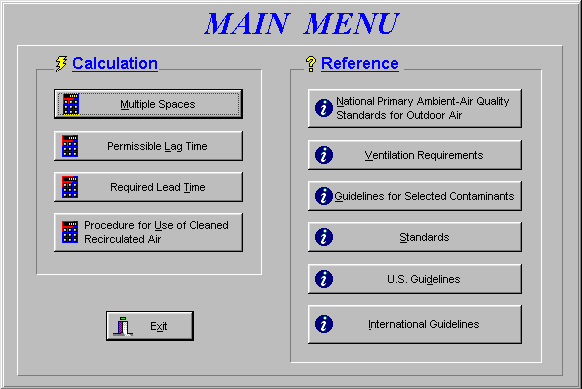
- CALCULATES VENTILATION FOR MULTIPLE SPACES - When different spaces, each with its own ventilation needs, are served by a single air handler, a decision must be made regarding how much ventilation (outdoor air) must be provided to the air handler. Ventilation Tools performs this calculation, using the requirements of all the spaces. The program determines which space has the most critical need for ventilation, and how much outdoor air is needed overall in order to the meet the requirements of ANSI/ASHRAE Standard 62.
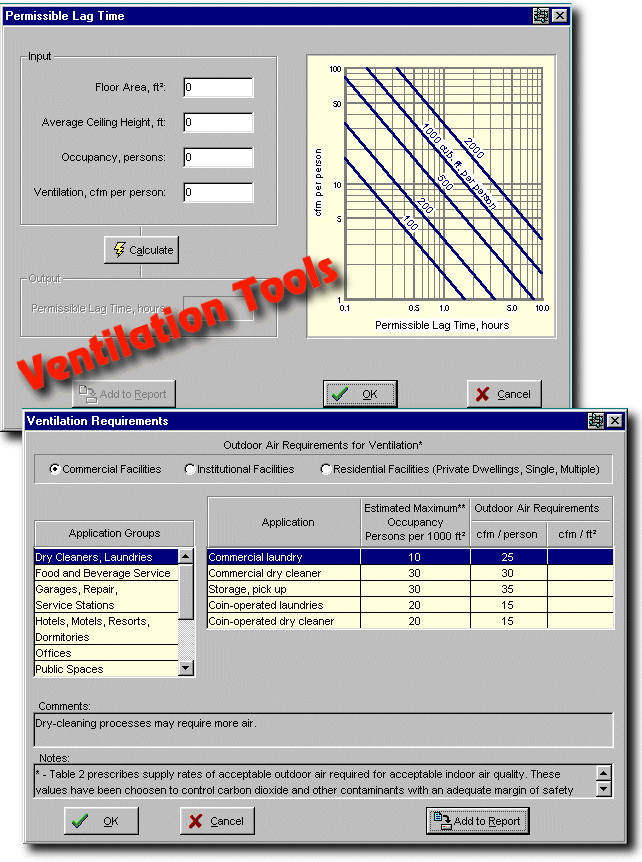
- CALCULATES PERMISSIBLE LAG TIME - If a building does not have contaminants which are generated when people are not in the building, it is permissible to turn on the ventilation some time ("lag time") after the building is occupied. This does not compromise indoor air quality, and will reduce energy costs. Ventilation Tools calculates the lag time, given the building size, ventilation requirements, and occupancy.
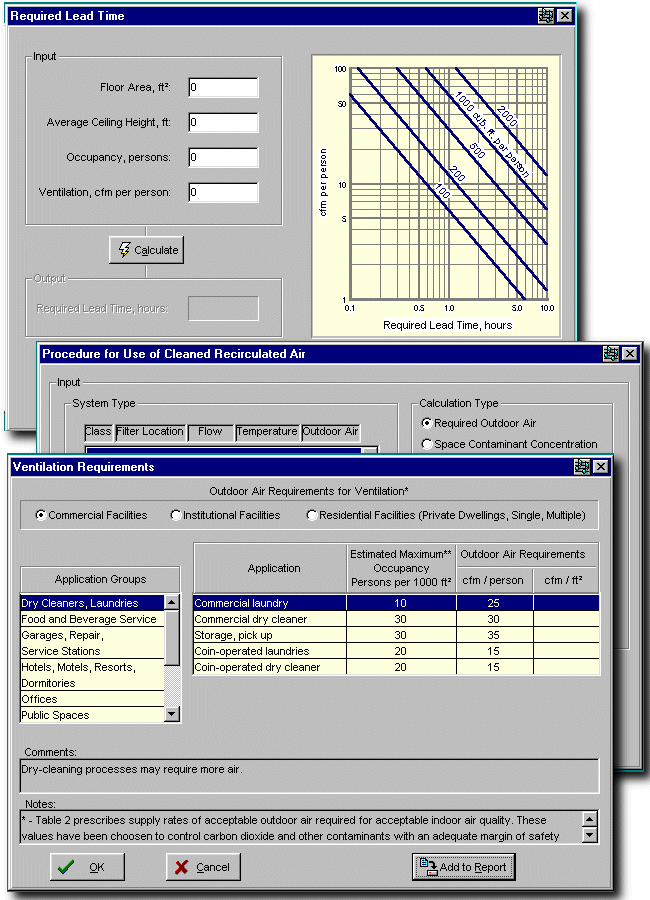
- CALCULATES REQUIRED LEAD TIME - If, in contrast to the situation described above for "permissible lag time", a building contains contaminants which are generated even when people are not present, the building ventilation system must be started some time before the building is occupied ("lead time"), in order to dilute any concentration buildup. Ventilation Tools calculates this lead time, given the building size, ventilation requirements, and occupancy.
- CALCULATES VENTILATION RATES IF RECIRCULATED AIR IS CLEANED - Ventilation levels can be reduced if it can be shown that air cleaning (filtering) is being effectively undertaken. Reducing ventilation significantly reduces energy costs and improve comfort. Ventilation Tools calculates how much ventilation can be reduced, for different levels of filtration effectiveness, system airflow rates, contaminant concentrations, and other factors.
- PROVIDES EXTENSIVE REFERENCE INFORMATION: Ventilation Tools displays the following reference information in quick and easy lookup windows, and for insertion into reports.
- Ambient-Air Standards: Ambient (outdoor) air strongly influences indoor air quality. Ventilation Tools lists short-term and long-term U.S. air quality standards for common contaminants.
- Ventilation Requirements: A variety of facility types (residential, institutional, and commercial), applications (buildings), and rooms are listed. Choose the type of facility, building, and room, and Ventilation Tools looks up the required ventilation level.
- Concentration Guidelines: Ventilation Tools lists a variety common indoor contaminants, and associated U.S. and international guidelines for contaminant concentrations indoors.
- Standards: To help indoor air quality professionals to assess their own measurements or predictions, a contaminant may be chosen, and Ventilation Tools looks up associated U.S. federal and state standards, for outdoor, indoor and workplace exposures.


 HVAC Solution